How to Predict Draws in Football: Stats That Matter
Draws happen in roughly one in four matches. See which leagues draw most, which stats point to a level score and how to judge draw odds fairly.
How Often Do Football Matches End in a Draw?
Roughly one in four league matches ends in a draw, but the rate varies by competition and season. No single stat predicts draws on its own; a combination of evenly matched sides, low expected scoring and match context that leaves both teams content with a point is what raises the draw probability.
A football draw means both teams finish level with the same score, whether 0-0, 1-1 or 2-2. All draw predictions in this article refer to the full-time result after 90 minutes plus stoppage time. Extra time and penalties do not count. In the 1X2 market, X stands for a draw, 1 for a home win and 2 for an away win, and the draw market is priced like any other particular outcome.
Key points about draw frequency:
- Draws occur less often than wins: in the ten popular leagues and competitions we track below, draw rates in 2025/26 ranged from 18.9% to 27.8%, which makes the draw the least common of the three full-time outcomes.
- Home wins were the most common result everywhere, between 39.0% and 50.2% of matches.
- The most common draws are 1-1 and 0-0, which reflects the link between draws and low-scoring matches.
- Cup competitions with big gaps in quality between teams, such as the Champions League, produce noticeably fewer draws.
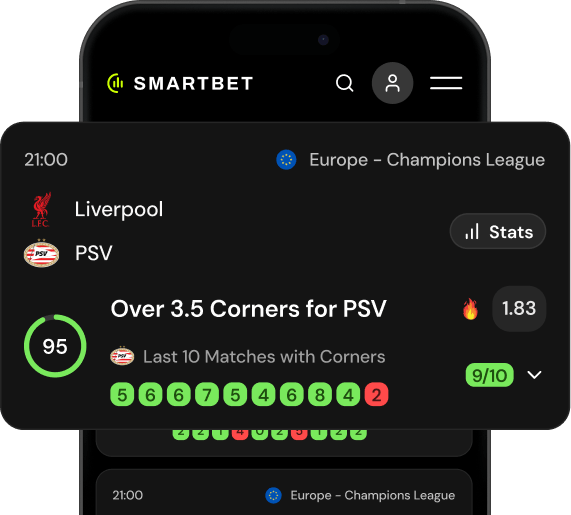
Prédictions Footballistiques Basées sur les Données
Analyses de matchs basées sur l'IA utilisant la forme de l'équipe, les statistiques clés et les paris à valeur pour soutenir les décisions de paris plus intelligentes.
Consultez les prédictions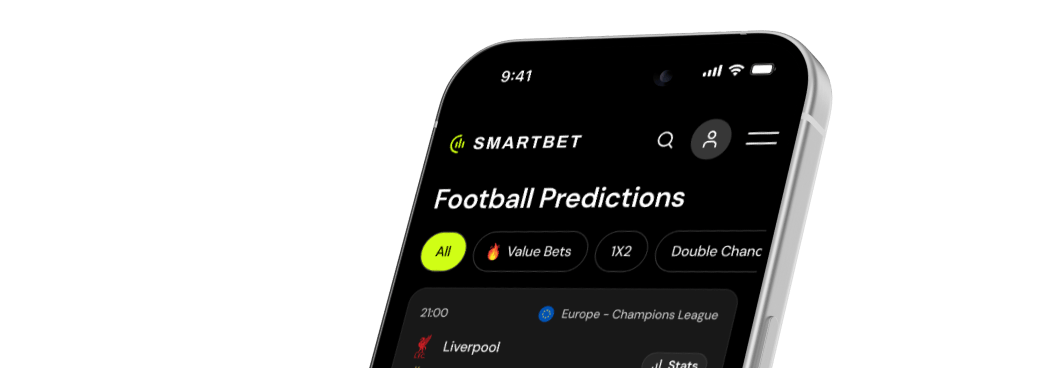
Draw Rate by League (2025/26)
Different leagues produce different draw stats because of tactical culture, competitive balance, average goals per game and the strength of home advantage. A league where most clubs play cautious, compact football will naturally see more stalemates than one packed with high-scoring sides.
League | Draw % | Home Win % | Away Win % |
|---|---|---|---|
Ekstraklasa | 27.8 | 45.1 | 27.1 |
Premier League | 27.4 | 42.6 | 30.0 |
Liga Portugal | 27.1 | 41.2 | 31.7 |
Championship | 26.6 | 41.6 | 31.8 |
Eredivisie | 26.2 | 44.7 | 29.1 |
Serie A | 26.1 | 39.0 | 35.0 |
La Liga | 24.5 | 49.0 | 26.6 |
Bundesliga | 24.5 | 43.8 | 31.7 |
Ligue 1 | 24.3 | 46.2 | 29.5 |
Champions League | 18.9 | 50.2 | 31.0 |
Source: SmartBet.gg data, 2025/26 season, 90 minutes plus stoppage time. Browse the full match result statistics for every tracked league.
The Ekstraklasa and the Premier League recorded the most draws at 27.8% and 27.4%. The Champions League had the fewest at 18.9%, partly because mismatches between clubs of very different strength push more games towards a decisive winner. Draw rates move from season to season, so treat one season as a guide, not a rule.
There are no permanent draw specialists among European leagues: low scoring leagues and some second division competitions often produce more draw games, but historical results only tell you what happened, not what will happen. If you focus on draws, starting with leagues that consistently sit around 26% or higher gives you a slightly wider pool of candidates. Even there, three out of four matches still end with a winner.
Draw Tips: Stats That Point to a Draw
No single number settles it, but combining several angles turns a vague hunch into a data-backed estimate. These draw tips are about finding teams and fixtures with a high probability of a level score, not about guessing.
- Evenly matched teams. When two teams sit close in the table and show similar recent form, the chance of a decisive result drops. Close pre-match odds in the 1X2 market, with no heavy favourite, are a quick signal.
- Low-scoring profiles. When both sides score and concede few goals per game, a 0-0 or 1-1 becomes more likely. Fewer goals means fewer chances for one team to pull away.
- Head-to-head history. Historical data from previous meetings can reveal a pattern of tight margins or frequent draws. Treat old results with caution: meetings under different managers or with different squads carry little weight.
- Home and away records. A home team that struggles to win at home, or an away team that rarely loses its away matches, both point towards a level finish.
- Match context. Late-season games where both sides are happy with a point, cautious away teams and some derbies push outcomes towards a stalemate. Injuries and suspensions that weaken one team's attack can do the same.
- Weak home advantage. When the home side has poor home form, the gap between home win, draw and away win narrows, and the draw becomes more likely.
The most important factor is how these signals combine. Rather than chase a single magic stat, use a stats-based platform like SmartBet.gg to layer these angles across upcoming fixtures and the latest draw predictions on a regular basis. It is a mathematical approach, built on statistics rather than gut feeling.

How Bookmakers Price Draws and Why Draw Odds Look High
Draw odds are higher than odds on the favourite because the draw is less likely to happen. Most punters also prefer backing a team to win rather than predicting that the teams finish level, which can leave bookies' odds on the draw slightly less efficient than the win prices.
Fair odds equal 1 divided by the probability, ignoring the bookmaker's margin. If your analysis gives a match a 27% draw probability, the fair odds are 1 ÷ 0.27 ≈ 3.70.
- If the bookmaker offers 4.00, the price is better than fair by roughly 8%. That gap is your edge.
- If the price is 3.40, the market pays less than the probability justifies. There is no edge, however confident the preview sounds.
- When the odds on the home win and the away win are unusually close, the implied draw probability tends to be higher.
Value betting on draws means betting only when your estimated probability is higher than the probability implied by the odds. That is where real value comes from in football betting, not from the size of the price. SmartBet.gg's draw predictions show the draw probability next to bookmaker odds and expected value (EV), so you can see whether a price offers value before you decide.
How to Predict Draws in Football: A Step-by-Step Process
Step 1: Start with the league. Look first at leagues with higher draw rates, around 26% or above. The table above shows which ones qualified in 2025/26.
Step 2: Compare team form. Check the last five to ten matches for both teams: wins, draws, losses and goal difference. Target fixtures where both sides show similar form.
Step 3: Check goal averages. Favour matches where both teams score and concede relatively few goals per game. That profile supports a 0-0 or 1-1.
Step 4: Look at each team's draw rate. Check how often the home side draws at home and how often the away side draws away. When both are above their league average, the fixture deserves a closer look.
Step 5: Review match context. Consider the stage of the season, the table and what each team needs from the game.
Step 6: Compare your estimate with the odds. If the bookmaker's price implies a lower probability than your estimate, you may have found value. If not, skip the bet. A pre-match analysis checklist helps structure this.

Draw vs Double Chance vs Draw No Bet
There are three main ways to express a view around a draw: the straight draw (X), double chance and draw no bet.
Market | What wins? | Odds level | When it fits |
|---|---|---|---|
Draw (X) | Only a draw | High | You see a strong draw case and want the full payout |
Double chance (1X or X2) | Two of three outcomes | Low | You lean to one team but want the draw covered |
Draw no bet | Your team wins; stake returned on a draw | Medium | You back one team and want protection if it ends level |
A straight draw selection pays the most but loses if either team wins. Double chance gives up odds for a much higher hit rate. Draw no bet refunds your stake on a draw and sits between the two. The right choice depends on your risk tolerance and the price, not on which market sounds safer.
Draw Betting Systems and Discipline (Without Martingale)
No draw system removes risk. Even at a 27% draw rate, roughly three out of four football games end with a winner, so losing runs are normal. Good betting systems for draws are about discipline, not guaranteed profit.
- Focus. Stick to a few leagues with higher draw rates and consistent data instead of betting on every match.
- Filter. Only bet fixtures that meet several criteria at once: similar form, low goal averages, high draw rates for both teams and a price above fair odds.
- Flat stakes. Stake the same amount on each selection with positive expected value. Do not increase stakes after losses.
- Track everything. Record every pick, win and loss to measure your real return over time.
- Skip days. If no fixture meets your criteria, do not bet.
- No Martingale. Doubling stakes after losses turns a normal losing run into a large loss.
- Avoid the draw accumulator. Combining several draw picks in one bet multiplies the odds but also multiplies the chance that one leg fails. Singles keep the maths under control.
Common Mistakes in Draw Betting
- Treating a draw as "due". A team that has not drawn for weeks is not more likely to draw next. Each match starts fresh.
- Ignoring the price. Betting every match that "looks like a draw" without comparing the odds to your probability leads to negative expected value.
- Misreading head-to-head stats. Results from a different manager, squad or season may say little about the current fixture.
- Betting too many matches. Draws reward selectivity. A few well-researched picks beat many random ones.
- Reacting to the half-time score. A 0-0 at half time does not prove a draw prediction right, and a 1-0 does not prove it wrong.
- Trusting "sure draw" tipsters. Free tips and paid betting tips that promise fixed or guaranteed draws are selling noise. Use betting predictions from sources that publish both hits and misses.
- Reading an even score too early. An even score at half time is not a draw result yet.
FAQ: Draw Predictions and Draw Betting
How often do football matches end in a draw? Roughly one in four league matches. In 2025/26 the rate ranged from 24.3% to 27.8% across the domestic leagues in our table, and 18.9% in the Champions League.
Which league has the most draws? In 2025/26 the Ekstraklasa had the highest draw rate in our table at 27.8%, just ahead of the Premier League at 27.4%. The Champions League had the fewest at 18.9%.
Are 0-0 and 1-1 the most common draws? Yes. 1-1 and 0-0 are the most frequent draw results, because draws are closely linked to low-scoring matches.
Is it better to bet the draw or double chance? It depends on the price and your risk tolerance. A straight draw offers higher odds but wins less often; double chance wins much more often at lower odds.
Do stats guarantee a draw prediction wins? No. Stats help estimate probabilities more accurately than guesswork, but they cannot remove randomness. At typical draw rates, most draw bets lose, which is why only value at the right price makes sense over many bets.
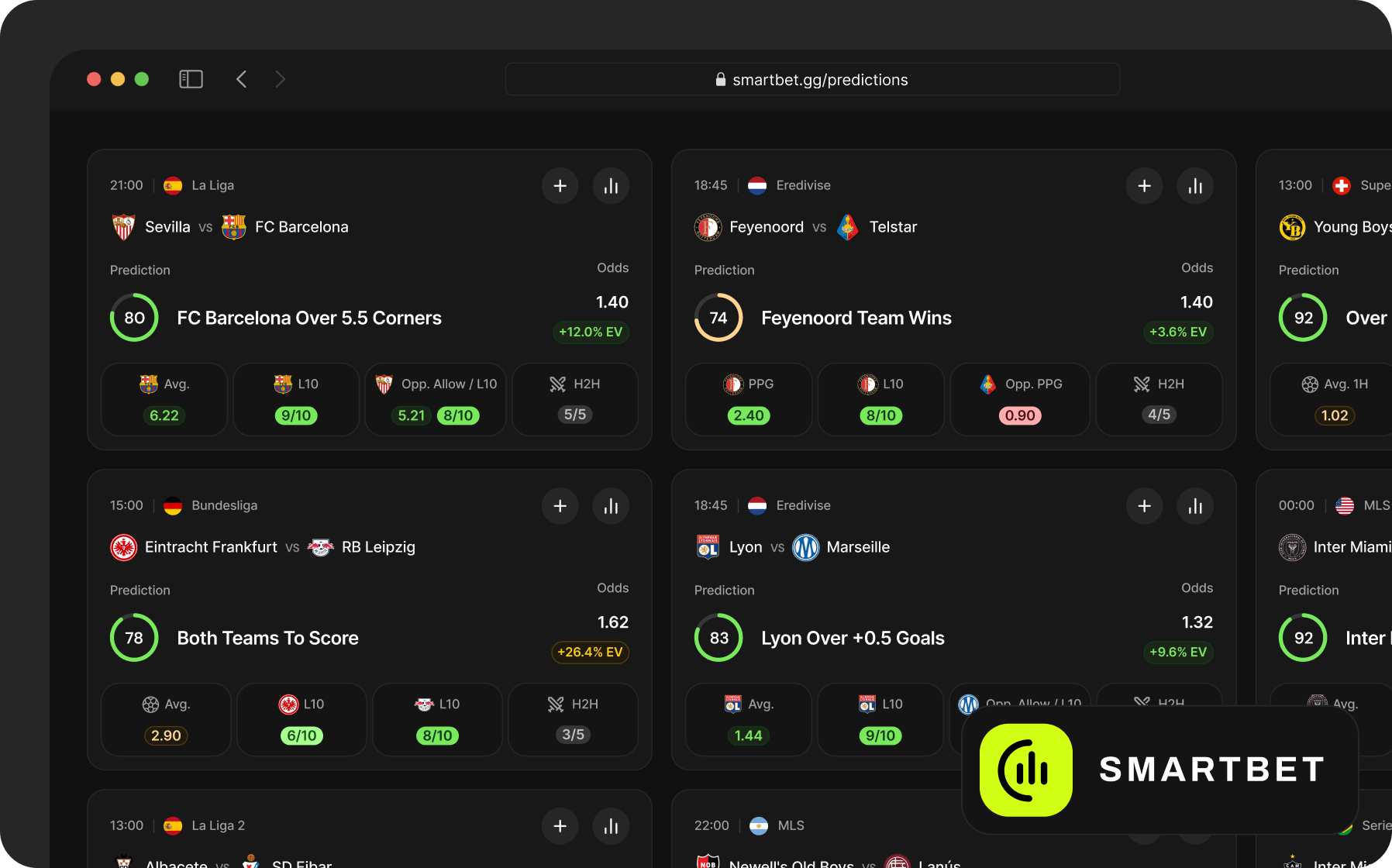
SmartBet.gg's Data-Driven Draw Predictions
SmartBet.gg is a stats-based football predictions platform covering 120+ leagues and different teams across 15+ betting markets, including the 1X2 draw. It is not a bookmaker.
- Every prediction is built from team form, home and away splits and head-to-head data.
- Each prediction shows the draw probability, bookmaker odds and expected value, so you can judge whether the price offers an edge.
- Results are published openly, including losing picks. No cherry-picking and no guaranteed-win claims.
See today's draw predictions on SmartBet.gg: 2 free picks daily, and Premium unlocks every match and market.
Treat betting as entertainment, stake only what you can afford to lose and never chase losses.

Articles Associés