Football Statistics – How to Read Match Data
Learn how football statistics really work. Discover which football stats matter, how to read team statistics, and how professionals analyze matches.

What Are Football Statistics and Why Do They Matter?
For most fans, football statistics are something checked after the match.
For analysts and bettors, they are the starting point.
Football statistics allow you to:
- understand how a team actually performs, not just the result,
- compare teams across leagues and seasons,
- identify trends that repeat over time,
- remove emotions from decision-making.
The key difference is interpretation. Raw numbers alone do not create value. Context does.
Football Stats vs Results – Why the Scoreline Is Often Misleading
A final score hides more than it reveals.
A 1–0 match can be:
- total domination,
- a defensive stalemate,
- a lucky goal with no follow-up chances.
That is why football match statistics matter more than the score itself. They show:
- how often teams create chances,
- whether goals are repeatable or random,
- how matches usually unfold, not how one match ended.
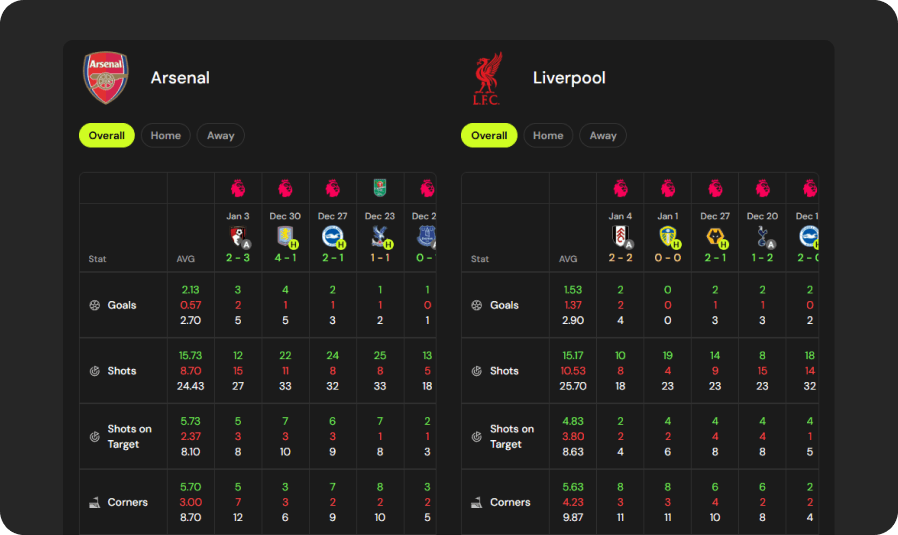
This is where the difference between a fan and a player analyzing today's soccer matches for betting purposes begins.
Types of Football Statistics You Should Actually Care About
Not all football stats are useful. Professionals focus on repeatable, market-relevant data.
Goals Scored and Goals Conceded
This is the foundation of all analysis, but only when:
- averaged over multiple matches,
- split into home and away performance,
- compared with league averages.
Teams that score and concede consistently behave very differently from teams with extreme but unstable results.
Team Stats and Team Statistics in Context
Team stats should never be read in isolation.
Good analysis always asks:
- How do these team statistics compare to the league average?
- Are the numbers stable over time?
- Do they change significantly home vs away?
This context is what separates analysis from guesswork.
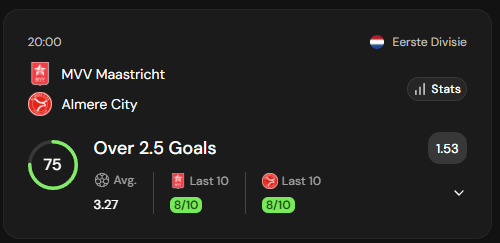
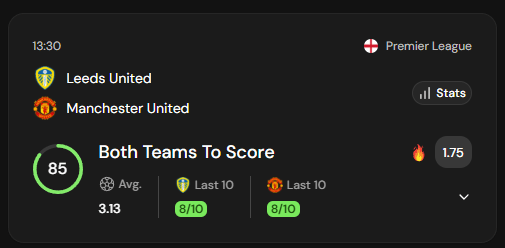
Football Stats for Goal Markets (BTTS, Over/Under)
When analyzing goal-related markets, useful football statistics include:
- percentage of matches with goals,
- frequency of BTTS results,
- over 1.5 / over 2.5 trends,
- consistency rather than peak results.
High-scoring teams with strong defenses are often poor goal-market candidates. Balance matters more than raw attacking strength.
Corner Kicks and Possession-Based Metrics
Modern football betting increasingly relies on specific market data, not just goals.
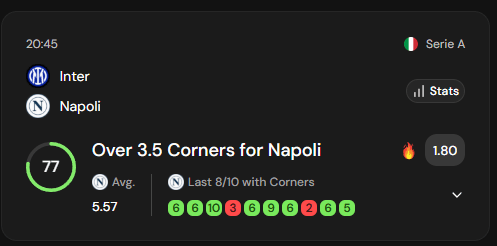
For corners, relevant football stats include:
- average corners won,
- average corners conceded,
- attacking width and crossing frequency,
- tempo and territorial dominance.
Corner markets reward teams that apply pressure, not teams that simply score.
League Context – Why Soccer Stats Change by Competition
Football statistics behave differently across leagues.
Key league-level factors include:
- average goals per match,
- tactical discipline,
- refereeing style,
- pace of play.
A team with strong stats in one league may show average numbers in another. This is why league statistics must come before team statistics, not the other way around.
Soccer Stats Websites vs Analytical Platforms
Many users rely on classic soccer stats websites that list:
- shots,
- possession,
- corners,
- fouls.
These platforms are useful for raw data, but they often lack:
- filtering,
- comparison tools,
- betting-focused structure.
Modern analysis increasingly relies on data aggregation and context, not just tables.
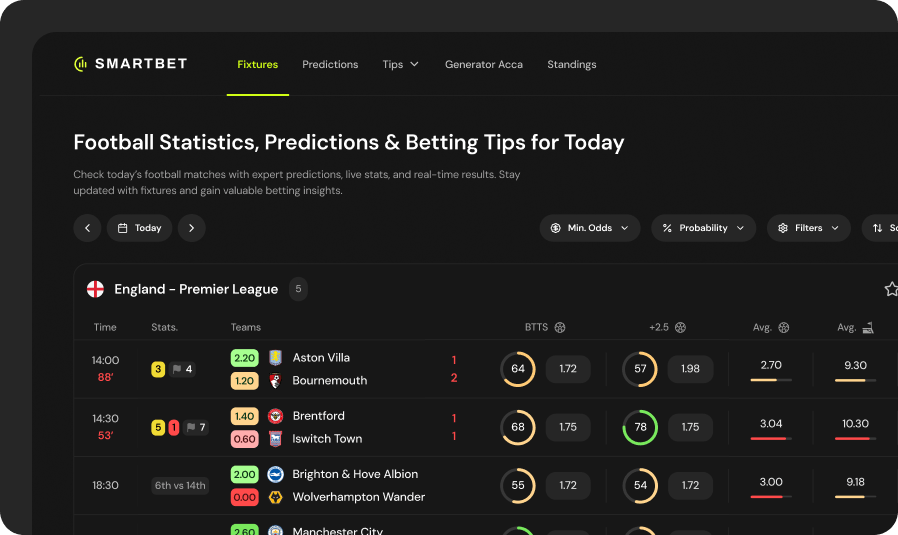
Platforms such as SmartBet organize football statistics specifically for match analysis and betting decisions, combining team stats, league data, and market trends in one view.
How Professional Bettors Use Football Statistics
A professional approach to football statistics is not about finding “perfect” matches.
It is about elimination.
Professionals use stats to:
- remove matches with low statistical consistency,
- focus on leagues with stable trends,
- reduce the daily match list to a manageable size.
This process-driven approach is what allows long-term consistency.
Football Predictions Based on Data
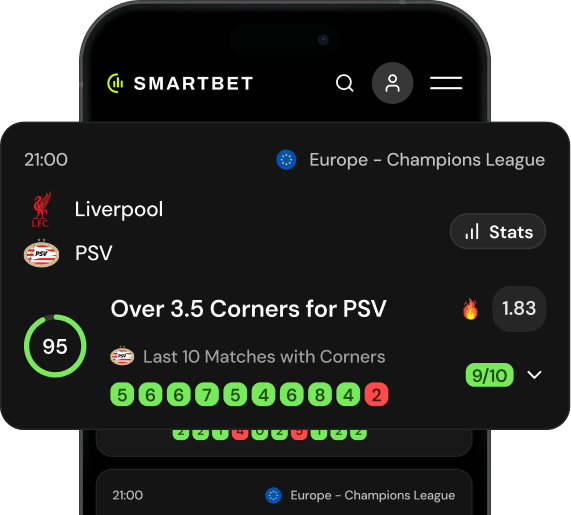
AI-driven match analysis using team form, key statistics and value bets to support smarter betting decisions.
Check predictions
Football Statistics and Daily Match Selection
When analyzing today’s football matches, statistics should narrow choices, not expand them.
Effective daily workflow:
- Filter leagues by goal or tempo trends
- Compare team statistics to league averages
- Check home/away splits
- Confirm match context
If a match fails at any step, it is removed.
Common Mistakes When Using Football Stats
Even experienced users make the same errors:
- analyzing too small a sample,
- ignoring league context,
- mixing stats for different markets,
- treating statistics as predictions instead of probabilities.
Statistics improve decision quality, not certainty.
Football Statistics vs Reputation
One of the biggest advantages of football statistics is the ability to ignore:
- team popularity,
- media narratives,
- recent headlines.
Strong teams do not always produce strong statistical value. Data reveals this difference quickly.
FAQ – Football Statistics
What are football statistics and how should beginners understand them?
Football statistics are numerical data that describe how teams perform over time, not just how a single match ended. For beginners, the most important thing is to understand that statistics are patterns, not predictions. Goals scored, goals conceded, match tempo, and home vs away performance help explain how a team usually plays. Instead of trying to memorize every metric, beginners should focus on a small group of repeatable statistics and learn how they behave across multiple matches.
What is the difference between basic soccer stats websites and professional football statistics platforms?
Basic soccer stats websites typically display raw data such as goals, shots, possession, or corners. Professional football statistics platforms go further by organizing data by markets, trends, and context. They allow users to compare team statistics against league averages, analyze home and away performance, and filter matches based on predefined criteria. This structure is essential for betting-focused analysis.
How does SmartBet help analyze football statistics more effectively?
SmartBet organizes football statistics specifically for match analysis and betting decisions. Instead of browsing multiple websites, users can view team stats, league trends, and market-relevant data in a single dashboard. This helps maintain a consistent analysis process and reduces the risk of overlooking important context.
Are football statistics reliable for daily match predictions?
Football statistics improve decision quality, but they do not guarantee outcomes. For daily match analysis, statistics should be used to filter out matches that lack statistical support. Successful bettors accept uncertainty and focus on selecting matches where probabilities are clearly supported by data. Statistics reduce randomness, but they do not eliminate it.
Can football statistics help identify value bets?
Yes, but indirectly. Football statistics do not show value by themselves; they help estimate probability. Value appears when the estimated probability differs from bookmaker odds. By using statistics to build consistent probability assessments, bettors can more easily identify mismatches between data and market pricing.

Related Posts