How Football Prediction Tools Actually Work
Learn how football prediction tools and services actually work. From raw statistics and models to probabilities, odds, and betting decisions.

Football prediction tools and football prediction services are often treated as the same thing. In reality, they operate very differently. Understanding how predictions are generated, processed, and delivered is essential for using these tools correctly and avoiding common mistakes.
This article breaks down how football prediction tools and services actually work — step by step — from raw data to betting decisions.
Step 1: Data Collection – Where Predictions Start
Every football prediction tool begins with data. This data typically includes:
- historical match results
- team and player statistics
- goals, shots, xG, corners, cards
- league-specific trends
At this stage, prediction tools are no different from statistics websites. The difference appears only once data is processed.
Step 2: Data Processing and Feature Selection
Raw data is rarely used directly. Prediction tools transform statistics into usable inputs, often referred to as features.
Examples include:
- average goals adjusted for opponent strength
- home vs away performance weighting
- recent form decay (recent matches weighted more heavily)
This step has a major impact on model quality and is often invisible to end users.
Step 3: Modelling – How Predictions Are Generated
Once data is prepared, tools apply models to estimate outcomes.
Common approaches include:
- statistical regression models
- Poisson-based goal models
- machine learning algorithms
At this stage, the tool produces probabilities, not betting decisions.
This is where many users misunderstand prediction tools: a probability estimate is not a recommendation.
Step 4: Output – Tools vs Services
Here the distinction between tools and services becomes clear.
Prediction tools
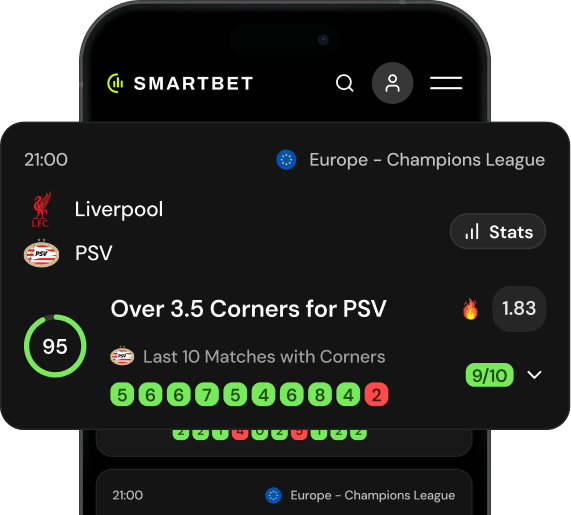
Prediction tools present probabilities, metrics, or model outputs. Users are expected to:
- interpret the numbers
- compare them with bookmaker odds
- decide whether a bet makes sense
Football Predictions Based on Data
AI-driven match analysis using team form, key statistics and value bets to support smarter betting decisions.
Check predictions
Prediction services
Prediction services usually skip interpretation and deliver:
- final selections
- tips or signals
- automated bets
This removes user responsibility, but also removes transparency.
Step 5: Odds Comparison and Market Context
Without odds, predictions have no betting value.
More advanced tools integrate:
- bookmaker odds comparison
- implied probability calculation
- market movement tracking
This step determines whether a prediction has any practical relevance.
Step 6: Decision Layer – Where Most Tools Stop
Many football prediction tools stop after generating predictions. They do not:
- evaluate expected value
- account for variance
- track long-term results
As a result, users may follow predictions without understanding whether they are profitable over time.
How SmartBet Differs at the Decision Level
SmartBet is designed to extend the process beyond predictions.
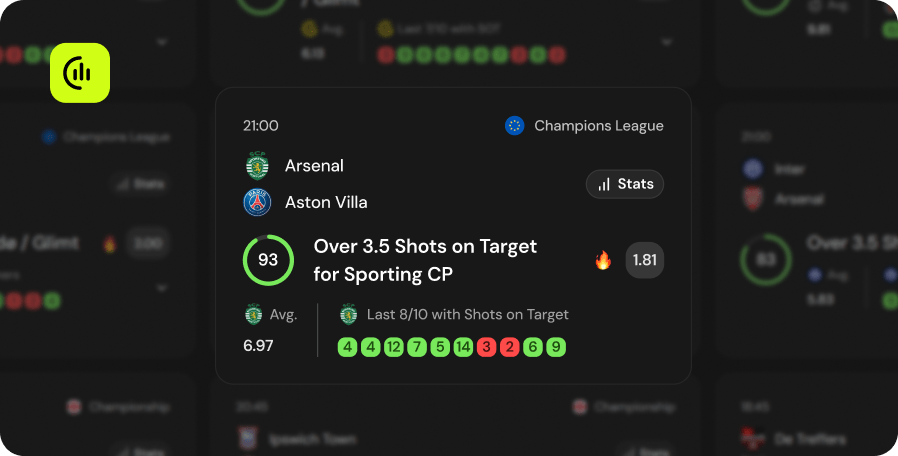
Instead of stopping at probabilities, SmartBet adds a decision layer that combines:
- model-based probabilities
- bookmaker odds
- expected value calculations
This allows users to assess whether a prediction represents value, rather than relying on the prediction itself.
Common Misconceptions About Football Prediction Tools
- Predictions are not guarantees
- Higher accuracy does not equal profitability
- Short-term results are statistically meaningless
Prediction tools should support structured decision-making, not replace it.
Final Thoughts
Football prediction tools and services follow a multi-step process that starts with data and ends with a betting decision. Understanding each stage helps users avoid unrealistic expectations and misuse of predictions.
Tools that provide transparency at every step — from data to probability to value — offer a more reliable framework than tools focused solely on delivering tips.

Related Posts