Football Statistics for Betting – Which Data Matters?
Learn which football statistics actually matter for betting. Compare data sources, understand probabilities, and see how stats translate into betting decisions.

Access to football statistics has never been easier. In 2026, analysts and bettors can choose from dozens of platforms offering match data, team and player statistics, and increasingly advanced performance metrics. The challenge, however, is no longer access to data, but understanding which statistics actually matter in a betting context.
Many users are overwhelmed by charts, tables, and percentages without knowing which metrics help evaluate future matches and which simply describe the past. In this article, we explain which football statistics are genuinely useful for betting, where to find them, and why statistics are only the first step in the decision-making process.
Football statistics form one of the foundations of modern football prediction tools, which we discuss in more detail in the article “Football Prediction Tools 2026 – AI & Statistics”.
Which Football Statistics Are Actually Important?
Not all football statistics carry the same analytical value. For betting purposes, the most useful data describes performance quality and repeatable patterns, rather than one-off results.
Key metrics include expected goals (xG), total shots and shots on target, tempo of play, pressing intensity, and defensive indicators such as conceded xG or chances allowed. These statistics help explain how a team creates and concedes chances, not just whether those chances were converted.
It is precisely these types of data points that form the input for predictive models, whose mechanisms are explained in detail in the article “How Football Prediction Tools Work”.
Why Results and League Tables Can Be Misleading
Final scores often fail to reflect how a match actually unfolded. Teams can win despite being outplayed or lose matches where they dominated key performance metrics. Relying solely on league position, points totals, or winning streaks leads to simplified and often misleading conclusions.
Contextual statistics help separate short-term variance from genuine team strength, which is essential when evaluating future fixtures rather than past outcomes.
Which Websites Offer Detailed Football Statistics?
A wide range of platforms provide football data. The most commonly used sources include:
- SofaScore – detailed match statistics, player data, and visual insights
- WhoScored – player ratings, team profiles, and advanced metrics
- FBref – extensive historical data and league statistics
- FootyStats – statistics oriented toward betting markets
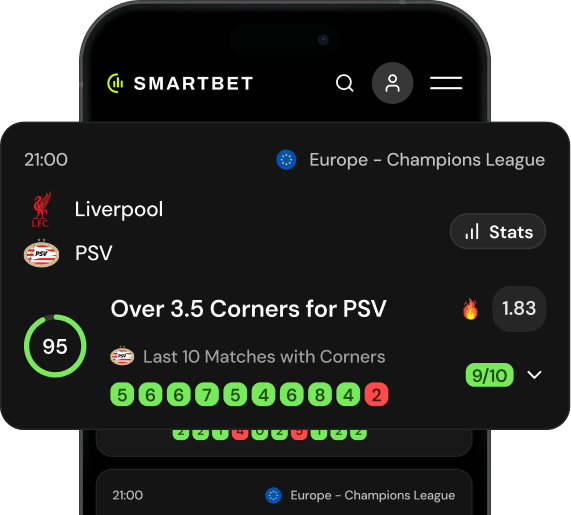
- SmartBet – football statistics combined with probability analysis, odds comparison, and expected value evaluation
While all of these platforms provide access to data, they differ significantly in how statistics are interpreted and applied.
Football Predictions Based on Data
AI-driven match analysis using team form, key statistics and value bets to support smarter betting decisions.
Check predictions
The Limitations of Traditional Statistics Websites
Most statistics websites focus on presenting numbers rather than interpreting them. Typically, they:
- do not convert statistics into probabilities,
- do not compare data with bookmaker odds,
- do not evaluate long-term betting value.
As a result, users receive information but must independently decide whether those numbers indicate a mispriced market or a fair one.
Where Statistics End and Betting Analysis Begins
Statistics alone do not answer the most important betting question:
Do the data suggest that bookmaker odds are mispriced?
To answer this, statistics must be combined with probability estimation and expected value analysis. This step marks the transition from descriptive analysis to decision-oriented betting analysis.
How Football Statistics Connect to Probability and Odds
Raw statistics describe performance, but betting decisions require probability. Estimating how likely an outcome is — and comparing that probability with the implied probability of bookmaker odds — is what determines value.
Only when statistics are translated into probabilities can expected value be calculated and markets evaluated objectively. This distinction separates statistical analysis from betting analysis.
How SmartBet Uses Football Statistics in Practice
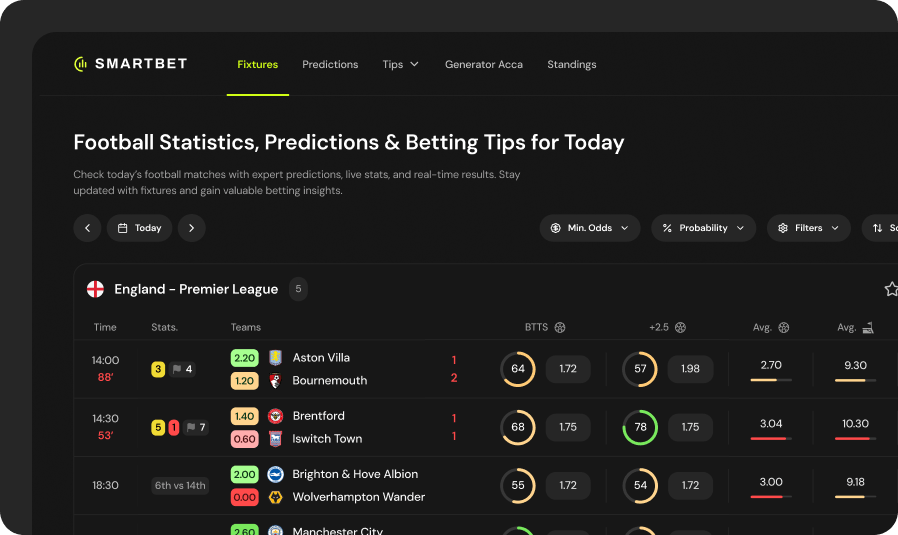
SmartBet provides its own football statistics, but its primary role goes beyond displaying data. The platform is designed to interpret statistics within a probability-based decision framework.
SmartBet combines:
- football match and team statistics,
- models estimating real outcome probabilities,
- bookmaker odds comparison,
- expected value analysis.
This approach allows users to assess whether statistical indicators point to genuine long-term betting value, rather than relying on surface-level trends or short-term results.
Statistics as a Tool, Not an Answer
Football statistics are an essential analytical foundation, but they are not a final answer. Without interpretation, market context, and probability assessment, numbers alone can be misleading.
A disciplined betting process requires statistics to be interpreted, contextualised, and evaluated against odds, rather than followed in isolation.
Final Thoughts
The best football statistics platforms provide broad access to data, but betting decisions require more than numbers. The critical step is moving from statistics to probability and expected value.
Platforms such as SmartBet illustrate how football statistics can be used not only to analyse past matches, but to support structured, data-driven betting decisions focused on long-term outcomes rather than short-term variance.

Related Posts